EOG-Derived Cognitive Biomarkers for Assessing Spatial Navigation Performance Using Hybrid Feature Selection
Jun 1, 2025·, ,·
0 min read
Rezvaneh Mirzapour
Farhane Mirzapour
Mobina Zibandehpoor
Mehdi Delrobaei
Abstract
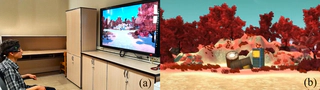
Human spatial cognition is an essential component of effective interaction with complex environments. This study explores the relationship between spatial navigation abilities and ocular behavior through electrooculography (EOG), aiming to identify quantifiable biomarkers of cognitive performance. Twenty-seven cognitively healthy participants completed the Wayfinding Questionnaire (WQ) and the Leiden Navigation Test (LNT), during which EOG signals were recorded. Eye movement metrics were extracted from EOG data, and two feature selection methods-the clearness based feature selection (CBFS) and the minimum redundancy maximum relevance (mRMR)-were employed to identify the most relevant eye movement features. Spearman’s rank correlation analysis revealed significant associations between eye movement patterns and spatial navigation performance. Index scores were developed for each …
Type
Publication
IEEE Transactions on Human-Machine Systems

Authors
Mobina Zibandehpoor
(she/her)
M.Sc. Researcher
Hi, I’m Mobina, an M.Sc. mechatronics researcher passionate about non-invasive assessment of human cognitive performance. My work sits at the intersection of computer vision, biosignal analysis, and machine learning, developing multimodal frameworks that combine vision-based pose estimation, IMU motion capture, and eye tracking for interpretable behavioral analysis. I enjoy designing algorithms and experimental systems that connect mechatronic instrumentation with real-world cognitive assessment.
Please reach out if you’re interested in collaborating on Human-Computer Interaction, biosignal analysis, or AI-driven behavioral assessment!😜